

Kinship Care

FFTA’s Kinship Care Philosophy
All children belong in families, preferably their own families. When children cannot safely live with their parents, they should have every opportunity to live safely with relatives or those with whom they have a family-like relationship.
FFTA’s Vision for Kinship Care
Consistent with FFTA’s kinship philosophy, FFTA’s vision is that children in out-of-home care with treatment needs can have those needs met by relatives or those with whom they have a family-like relationship, with access to the full array of training, services, and supports available through treatment care to help them stay safe, achieve permanency, and thrive.
Kinship Therapeutic Foster Care in North Carolina
FFTA was awarded two three-year grants, equaling over $2 million from The Duke Endowment to develop and implement therapeutic foster care within kinship homes. Building upon several Kinship Summits that FFTA held in states around the country from 2015-2018 and with the support of the Duke Endowment, FFTA launched this Kinship Therapeutic Foster Care (KTFC) pilot project in 2020 that was completed in 2025.
Training, Coaching, & Beyond: Building a Foundation to Support Kinship Services
As part of our commitment to advancing best practices in Kinship Care, FFTA created this guide, developed through our ongoing work in the Kinship Therapeutic Foster Care (KTFC) pilot project in North Carolina. This resource offers a comprehensive look at the foundational practices that can help organizations support kinship caregivers. This work is made possible through generous funding from The Duke Endowment, whose support allows us to continue innovating and refining services for kinship families. The guide highlights key areas of training, coaching, and cultural transformation needed to effectively engage and support kinship families. We share insights on overcoming bias, developing kinship-specific training for staff and caregivers, and the importance of continuous coaching and consultation. By applying these best practices, organizations can foster a kin-first culture, which is crucial for ensuring that youth in out-of home care are placed in nurturing, family-like environments. Whether you are looking to enhance your existing kinship program or start a new one, this guide is a valuable tool. It offers actionable strategies and lessons learned from the KTFC pilot that can be applied across different settings
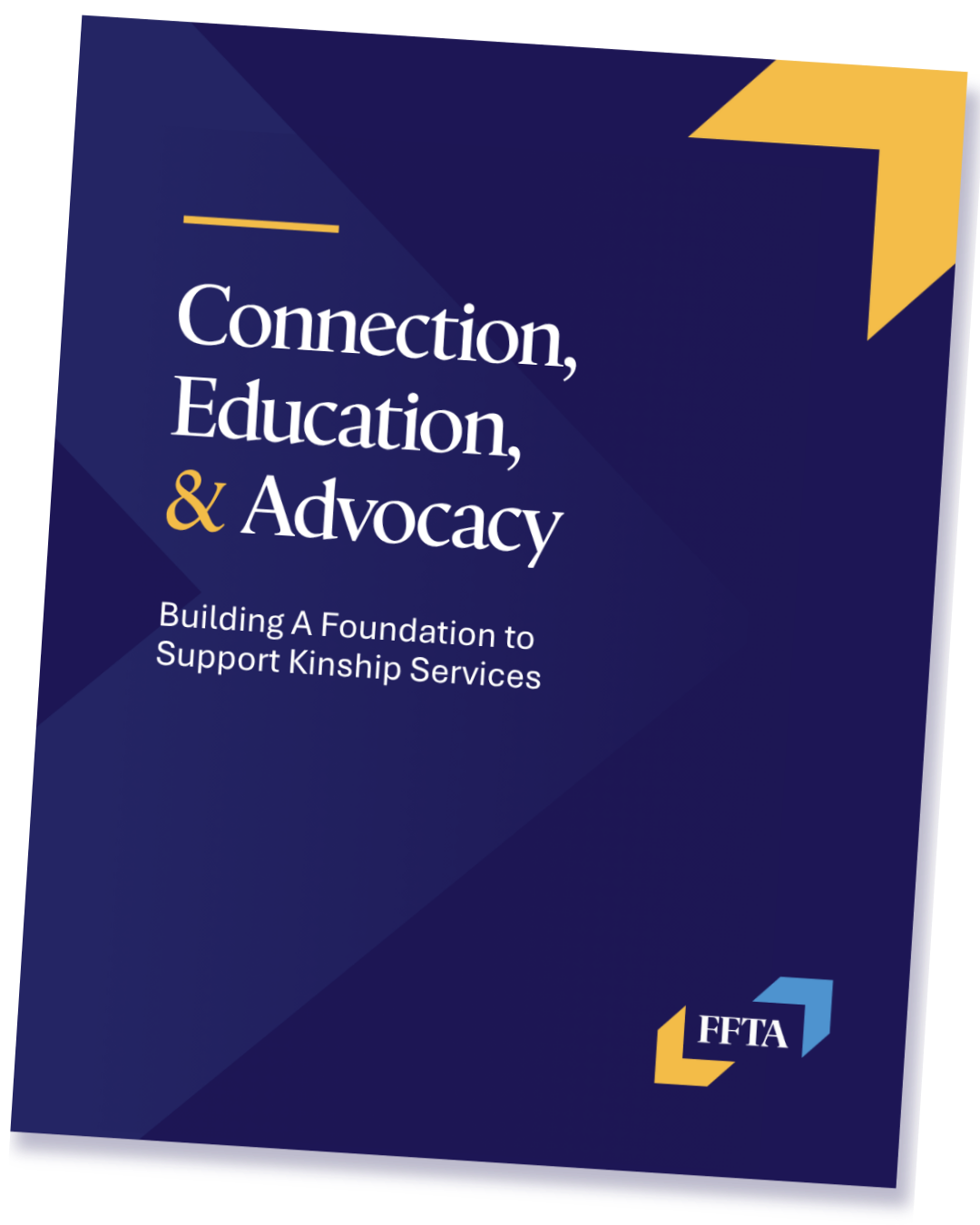
Access the Kinship Guide

Kinship Care Resources From Within the Sector
FFTA provides this resource list to help your organization build its competencies in finding engaging training and supporting kinship families
Additional Resources
Annotated Bibliography: Peer-Reviewed Research on Kinship Caregivers
Engaging Kinship Caregivers with Dr. Joseph Crumbley (Annie E. Casey Foundation)
Living and Working with Kin: A Real Life Experience (Children’s Community Programs of Connecticut)
Angela’s Story, A Kinship Caregiver with the Bair Foundation
GAO Report 20-434: HHS Could Enhance Support for Grandparents and Other Relative Caregivers
Partnering with Relatives to Promote Reunification (Child Welfare Information Gateway)
Live Scan Fingerprinting Technology – A Primer for Child Welfare Agencies (ChildFocus, Inc.)
Taking Care of Yourself While Raising Your Grandchildren - A Guide (RetireGuide)