
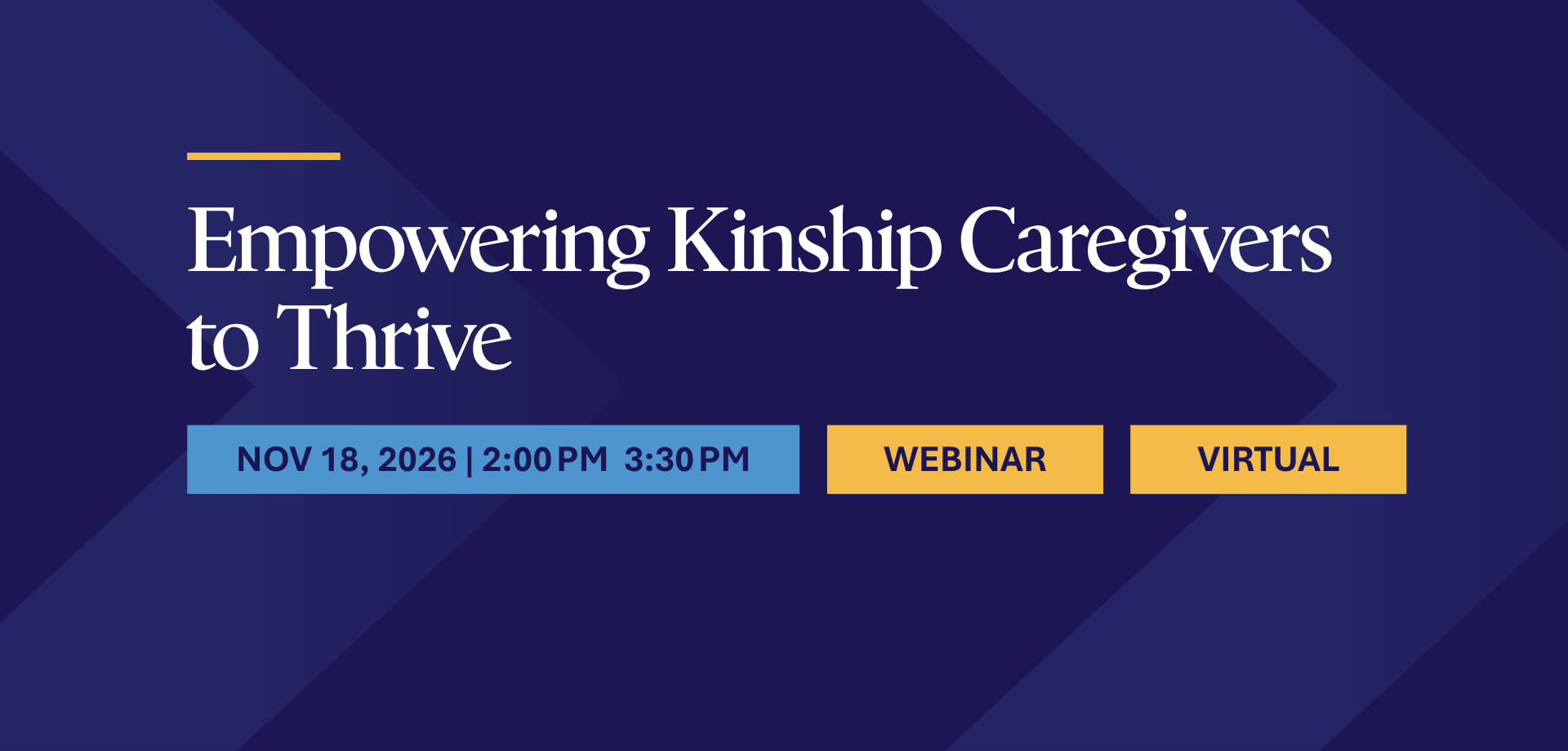
Online registration is available until: 11/18/2026
Kinship caregivers often step into their roles during moments of crisis, navigating complex systems, emotional strain, and significant practical challenges. Yet despite these roadblocks, kinship families consistently demonstrate remarkable resilience, cultural strength, and commitment to keeping children connected to their families and communities.
This training explores the opportunities for success that emerge when professionals intentionally recognize, honor, and build upon the inherent strengths of kinship families. Participants will examine common barriers kinship caregivers encounter, identify strategies that reduce obstacles, and provide examples of both formal and informal resources that can support the family and reduce barriers.
Learning Objectives:
Identify at least three unique needs and challenges of kinship caregivers.
Describe strength-based engagement strategies that support caregiver confidence and child well-being.
Locate and connect families with financial, legal, and peer-support resources.
Implement one change in their approach to working with Kinship caregivers.
Presenters:
Heather Hughey, COO, Connect Our Kids
Registration Fees:
FFTA Members: Free
Non-members: $75
This live webinar has been approved for 1.5 Cultural Competence Continuing Education hours. Family Focused Treatment Association, #1659, is approved to offer social work continuing education by the Association of Social Work Boards (ASWB) Approved Continuing Education (ACE) program. Organizations, not individual courses, are approved as ACE providers. State and provincial regulatory boards have the final authority to determine whether an individual course may be accepted for continuing education credit. FFTA maintains responsibility for this course. ACE provider approval period: 4/10/2025 - 4/10/2028.
Online registration is available until: 11/18/2026